Monday, November 22, 2010

LABAF 2010: From The Media (1V)

Lead Image
What's going on here... Jelili Atiku in performance

Talking folklore in books


The quarterly Art Stampede where vital issues in the arts and culture sector are discussed held on the last day of the Committee for Relevant Art (CORA) organised 12th Lagos Book and Art Festival (LABAF).
A panel comprising writer and academic, Akachi Adimora-Ezeigbo; dramatist, Lukman Sanusi; actor, Ropo Ewenla and writer, Dagga Tolar, examined ‘Folklore in Literature, Drama and Film' using four works as case studies. The works were Femi Osofisan's ‘The Adventures of a Sugarcane Man', an adaptation of D.O. Fagunwa's ‘Ireke Onibudo'; Andre Brink's ‘Praying Mantis'; ‘The Hidden Star' by Kabelo Duiker and Ahmadou Korouma's ‘Allah Is Not Obliged'.
The panel: Ropo Ewenla, Daggar tolar,
Akachi Ezeigbo (moderator) and Lookman Sanusi

Interesting topic
Setting the tone, moderator, Adimora-Ezeigbo, noted that the topic was interesting because the Nigerian society still depends on oral tradition. She said writers have been incorporating it into their works since the time of Amos Tutuola. The subject, the award winning writer added, is not new and that the panel would concern itself with the influence of folklore in contemporary literature.
Adimora-Ezeigbo further noted that novelist and academic, Isidore Okphewo, wrote an interesting article on folklore in which he highlighted five typologies. She, however, mentioned only four. The tradition preserved category consists of writers like poet and dramatist, J.P. Clark and Ugandan, Taban Lo Liyong, who don't do much experimentation with folklore but only present such in English.
Section of the audience: Akinosho (right), with Opakunle;
behind them Uche Nwosu
The tradition observed typology includes writers like the late Fagunwa and Tutuola while Nobel Laureate, Wole Soyinka is an example of a writer in the tradition refined category. Writers in the tradition revised class include those with some Marxist orientations like Ghanaian, Ayi Kwei Armah and Femi Osofisan.

Under Western influence
In his opening statement, Sanusi, who later discussed ‘Praying Mantis' noted the Chinese invasion of Africa and the danger this holds for the continent where people rely heavily on folklores. The vice chair, ANA Lagos, also emphasised the importance of speaking in the mother tongue.
Tolar's view wasn't different from Sanusi's. "The entire African space is under the jackboot of Western influence," he said. "The question of regenerating and rebuilding Africa means you must have a role for the young. This is where folklores come into play because they provide Literature with an opportunity to attract young people and make them feel part of that phenomenon," he added.
Section of audience
The ANA Lagos chair also noted that apart from established writers, young authors rarely use folklore while the received religions have also impacted negatively on its use. Tolar said that though many people are now writing, they do not have enough African background to effectively employ folklores. He said making such young writers aware of folklores will not only advance Nigerian literature but that "the process of rebuilding Africa socially and politically will be deepened."
Ewenla on his part held that the ability of a society to tell and archive a story for future generations to access is an indication of that society's mind. "The underdeveloped mind is the most terrible one. Are we teaching stories that can stand the test of time?" And though he supports using folklores in stories, Ewenla stressed that it must reflect current realities. "The mind that is going to write must decide based on its own reality."
Moderator, Prof Ezeigbo

Modern but ancient
Sanusi described ‘Praying Mantis' as "one crazy book that keeps going back and forth". He noted that Brink, a professor of English at Cape Town University, uses folklores well in telling Cupido Cockroach's story in the three parts of the novel. He also likened the novel to Chinua Achebe's ‘Things Fall Apart'.
Weighing in, Adimora-Ezeigbo noted that Brink reflects the 17th and 18th century's oral traditions of South Africa's Hottentots in the three parts of ‘Praying Mantis'. She added that what Brink seems to be saying is that Africans can be modern citizens but must never forget their roots.
Duiker, Tolar noted in his review of ‘The Hidden Star' successfully marries Christianity with tradition in the work. He said the author successfully employs folklore in telling the story of the child protagonist, a Christian who understands animals and who gets involved in a battle of good against evil to liberate her people. Tolar concluded that what Duiker has done is to show that the future belongs to the young.
Daggar Tolar
Ewenla, who played a role in Osofisan's ‘The Adventures of a Sugarcane Man', began with the multiplicity of narrators and narratives in the play. He said the playwright highlights the point that people play different roles in Africa and uses the stories to reinforce this. Osofisan's use of the story of Ologbo Ijakadi to resolve Ireke's dilemma in the play, Ewenla further noted, is an adept use of folklore. He added that the playwright also used Tiger's predicament to highlight the effect of greed and gullibility.
Ewenla said Ologbo Ijakadi's and Ifepinya's just desserts in the play confirms Osofisan's belief in the ancestor's assertion that no sinner will go unpunished. The beauty of the play for the actor, however, is that its many morals are applicable in modern society. Beyond vilifying covetousness and condemning greed, Ewenla said the ability of the play to build suspense on two levels brings back the childish excitement one has when listening to a story from one's grandmother and she decides to postpone completing it to the next day. "The ability of a society to tell a story and tell it well is an indication of the mind of that society," he said.
Lookman Sanusi
Discussing ‘Allah Is Not Obliged' which highlights the evil of child soldiering, Adimora-Ezeigbo noted it drips with folklores in the tones, cadence of speech and Black magic used in battles.

Integration is key
During the interaction, a commentator made a case for integration. He noted that the West had to integrate its culture with Christianity and that Nigerian writers should find ways of integrating our original culture with the modern.
Ropo Ewenla
Reacting to CORA general secretary, Toyin Akinosho's question of where Brink and Korouma belong to in her earlier typologies, Adimora-Ezeigbo said the duo belong to the tradition revised and tradition refined categories. She reiterated her position that Brink believes that there is nothing wrong with African tradition and that he is similar to Nadine Gordimer and JM Coetzee.
Sports journalist, Yomi Opakunle, charged writers to examine Nigerian folklores and highlight both the entertainment and educational values.
Earlier in the day, entertainer Jojo Body Beats, Duro Ikujenyo and others had engaged the children who turned up for the kiddies segment. ‘Kill Me the More', a performance condemning the NGA Bill by artist, Jelili Atiku, was another highlight of the last day of the festival. Many of the children left their seats to watch what the bound performance artist was up to.
Cast of 'The Killing Swamp' on set. The play continues this Sunday at teh Terra Kulture, Tiamiyu savage  Street, VI, Lagos
The 12th LABAF eventually ended with the staging of Onukaba Adinoyi-Ojo's ‘The Killing Swamps' by Wole Oguntokun's Renegade Theatre at Terra Kulture, Victoria Island, Lagos.


SCENES FROM THE FESTIVAL 


Festival Coordinators, Sola Alamutu, Ayo Arigbabu, Toyin Akinosho, jahman Anikulapo


Age of Acquarius leader, Duro Ikujenyo on the bandstand

Musical performance on course at the festival

The writers, Funmi Aluko, Nike Adesuyi and Akachi Ezeigbo


The Body Beater, Jojo on the drums

The Poets/Musicians, Cornerstone and Kafayat Quadri


LABAF 2010: From The Media (111)

Narratives of nationhood


The 12th Lagos Book and Art festival (LABAF) opened at the Exhibition hall of the National Theatre on November 12. The organizers, the Committee for Relevant Art (CORA) scheduled two festival colloquiums into the event in honor of Nigeria's 50th anniversary. Each discussion session was tagged with its own theme, with selected books which would be discussed by a group of panelists.
It therefore seemed appropriate that the first festival colloquium was titled ‘Literacy and Independence' and featured Wole Soyinka's ‘You Must Set Forth At Dawn', Sarah Ladipo Manyika's ‘In Dependence', Eghosa Imasuen's ‘To Saint Patrick', Ike Okonta's ‘When Citizens revolt and Wale Okediran's ‘Tenants of the House'.
"The books we are discussing, have at the core the nation-building experience," said Toyin Akinosho of CORA.
Panelists included Tade Ipadeola, Wumi Raji, Osita Agu, Wale Okediran, Yemi Ogunbiyi, who chaired the panel and Sir Olaniwun Ajayi, whose book ‘Nigeria, Africa's Failed Asset?' was also up for discussion on the panel.
Lead Image
Olaniwun Ajayi with Wale Okediran (right) and Ogunbiyi (left) 


Olaniwun Ajayi's book
Ogunbiyi expressed delight that a few students were present at the session. Before opening the forum for the first book, he echoed Professor Tamuno's words that ‘The Northernisation of Nigeria' would be another title for Olaniwun Ajayi's book.
According to him, the book seemed to be saying that unless Nigeria was restructured, it would fail. "The political imbalance in the country is the undoing of this country today. Since independence Nigeria has not experienced political stability," said Ajayi as he began to speak about his book.
"In this regard, our colonial masters played roles in structuring Nigeria in a way that it would ultimately be a failed experience", he pointed out. Ajayi, whose book reveals some of the intrigues of the British Government during colonial rule, said the British Government's move to amalgamate the various groups that now made up Nigeria, was the nation's undoing.
"I thought I should put on record the evil that the British people did. They put us together as if we were homogenous. You do not put people together like that, it will cause explosions like it has (done) in some parts of the world today," he said.
Ogunbiyi then asked Ajayi to express his view on the future of the country and the youths, some of whom were in the audience. "Their future lies in an event such as this," came the reply. "That is why I commend this festival which is attempting to get our children to read and learn. You cannot cheat one who is educated. Our kids should grow up knowing their rights."
He encouraged the students to continue to read and learn and to fight anyone who tried to rig elections. Ogunbiyi however told the audience that Ajayi's work was not an anti-North book, as the suggestion could arise.
He said that the writer balanced his treatise by documenting the fact that Northerners also faced oppression at the hands of their own rulers. Wumi Raji added to this by saying that Nigerians were also oppressed by their own indigenous rulers so Nigerians must begin to look beyond the North and South problem.

When Citizens Revolt
Osita Agu's review of Ike Okonta's ‘When Citizens Revolt' drew attention to the fact that ethnicity was a product of European rule and the country's response to it. According to him, although the book was about the atrocities committed against the Ogoni citizens and their revolt against this, it could also transcend this and become the response of Nigerian citizens against tyrannical governments. Agu also said that the writer of the book seemed to be arguing that local autonomy was essential to the nation.
Sarah Ladipo Manyika's ‘In Dependence' echoed similarities to the previous reviews. According to one of the panelists, woven around the narrative is the story of Nigeria and its crises since independence. The coups and counter coups, the civil war, the eroding of the educational system in the country were some of the issues in the book. In spite of this, the protagonist Tayo is still hopeful about the country and does not join his academic counterparts fleeing the country in search for greener pastures.
Past ANA president Wale Okediran read an excerpt from his latest work ‘Tenants of the House,' . "The book was borne out of my experience as a member of the house of Representatives. I decided to put down some of my experiences. In fictional form of course," he said.
Imasuen while commenting on his novel, ‘To Saint Patrick,' said he was intrigued by books that told the stories of Nigeria, like Wale Ademoyega's ‘Why We Struck'. "I often wondered what would happen if a point in history was changed" he told the audience. He then went ahead to read an excerpt from the book, showing what a simple change in history could result in.

World to conquer
Addressing the audience, especially the students, Ogunbiyi made reference to Imasuen and Okediran as doctors who were writers. "This is good for you young people to know that the creative world is yours to conquer, regardless of what you do." He encouraged the students to buy books from the display stand which consisted of different publishers displaying their books for sale.
Fielding questions from Journalists at the end of the session, Akinosho, spoke on some of the challenges of the festival, which included getting people to participate and getting people to buy books. "People are not naturally attracted to doing book things," he said.
He disclosed that the festival was dedicated to the Father of the African novel, Chinua Achebe at 80. "While he belongs to the world, he is also our son," Akinosho said. "He was published two years before our independence so he fits into the anniversary."
Akinosho expressed that the nation did not give premium to its creative writers. "So we'll celebrate ourselves," he added. The following day, LABAF held a birthday party in honour of art figures including Mabel Segun, Achebe, journalist Dele Momodu, broadcaster Patrick Doyle, poet Eddie Aderinokun and writer Uzor Maxim Uzoatu.

LABAF In the Media (2)

BY ABRAHAM OLADIPUPO AND AFOLABI DOLAPO
THE GUARDIAN on SUNDAY, 21 NOVEMBER 2010


Cross section of students at the festival
  
 JOYFUL and eager  children and  youths recently  stormed the National Arts Theatre, Iganmu,  venue of the children’s session of the 12th Lagos Book and Art Festival(LABAF 2010).
  The children had arrived the venue in high expectations and the programme lived up to its billing as the children later expressed their satisfaction .The event which was organised by Children And The Environment(CATE) in conjunction with the Committee for Relevant Arts(CORA), provided the children with the opportunity and platform to learn, improve and acquire more knowledge in writing, reading and other creative activities.
  Organised to empower  the young ones; and showcase the unlimited creative potentials of children and youths as well as to mark the 50th independence anniversary of Nigeria, the programme lavished attention on the young ones.
  Children from  schools in Lagos such as Greensprings College, Lekki, Liham School Yaba, Royal Master Alausa, Master Guide, Little Steps, Senobs Nursery and Primary School among others were tutored and inspired by Olaboludele Simoyan, an architect turned author of the 8th Wonder of the World-Made in Nigeria.
  The author challenged the students to imbibe the culture of reading.  “You don’t judge a book by its cover. For you to get the best from any book, you have to open and read in order to uncover the hidden treasure,” she said. The author, who experimented with the pupils and students added: “reading improves the way you think”. She lamented that lack of reading is one of the reasons the country is experiencing bad leadership.
Earlier in her welcome address, the coordinator of CATE, Ms. Shola Alamutu, said the session provides the opportunity for children and youths to explore their potentials as well as bringing together certain individuals whose interaction with books had helped inspired success.
There were performances by students of Greensprings College Lekki and Liham School while the Crown Troupe of Africa capped it all with a dance drama of Hubert Ogunde’s “Yoruba Ronu” .

Loads of fun at the festival.... face painting game
 Children Speak


It was a nice programme. All the dances, sketches and performances. It was really fun to watch and participate in them. I learnt more on reading and writing.
— Feyisayo Bello, 15, Greensprings College, Lekki.    

This programme is really enlightening. More people should join the chariot, and that will make it more exciting. I have learnt a lot.
— Victoria K.Nwandu, 15, Greensprings College, Lekki.

The programme is good and well structured. The order of the programme truly helped me understand and enjoy it.
— Femi Inuche, 13,  Greensprings College, Lekki.

The organisers are creative. The educational and creative aspects compliment each other. I learnt that anyone can write, one just needs to read wide and be creative.
— Annabel Haliday, 13. Greensprings College, Lekki.

I have learned to read my books and to develop confidence in whatever I do. Also, I think we children need more encouragement to achieve academic success.     
— Favour Godday, 12, JSS2, Master Guide School.

Before coming to this programme, I read novels and story books a lot and with what I have learnt here, I hope to do more of reading and I also hope to write a book very soon.
— Mayowa Ganzalo, 10. Primary 6, Master Guide School.
The programme is very nice and educative and it has taught me to be sincere and truthful.
— Mobolaji Temitope, 12.  JSS2  Master Guide School.

It’s nice and I love the dance performance..  It has taught me that reading my books is good for my education. So, I will start reading hard because I want to become a doctor in future.
— Esther Okorafor, 8, Pry 5 Master Guide School.

I have learnt to read and write and face my studies and listen to my teachers.
— Tomoloju Tola, 9years, Basic 4, Sanobs Nursery and Primary school.
Children performing at the event

I learnt how to read, write and draw and that I should be honest and hardworking.
— Agoe Emmanuel, 9, Basic 5, Sanobs Nursery and Primary school.

I had a lot of fun and I also enjoyed myself. I have learn that I should read my books very well and work hard in  my studies.
— Ekeh Victor, 5. Basic 1, Sanobs Nursery and Primary school.

I feel privileged to  be part of this event. It will boost my writing, reading and creative skills. The programme opened my eyes to the fact that there is abundance of talents in me which can be of great benefits to me and the society at large.
— Christian Oluwa, 15. Alakoto Senior Secondary School, Ajegunle.

I am impressed by the programme, not just the creative aspect of it but also the structure of the programme. This is my first time am attending this type of programme and from what I have seen today, I feel I have missed alot by not attending the previous ones.
— Tontonye Edimo, 15. Alakoto Senior Secondary School, Ajegunle.

The programme is inspiring, motivating and educative. It teaches us to read wide; reading outside one’s area of studies. This type of programme should be given more publicity because opportunity comes but once.     
— Juvitar Akra, 16. SS2, Alakoto Senior Secondary School, Ajegunle.

The programme is well organised. My eye has been opened to some hidden truths. Before now, I wasn’t reading much. But now , I think  I will have to improve on that if I wish to outshine or march the speakers of today.    
— Lasisi Asanatu, 16. SS2, Alakoto Senior Secondary School, Ajegunle.

I love this programme; I love it and I love it over again. Although,  I am a science student, I learnt what my field can’t teach me. I now understand and agree that ideas rule the world. As from now on, I will sharpen my writing and reading skills. Please, I want this programme sustained because it is revealing and inspiring.
— Anighogbo Hannah, 16. SS2, Alakoto Senior Secondary School, Ajegunle.

Today, I have learned beyond my imagination. This is not my first time of attending this festival but I think this edition is the first of its kind. The sketches presented on stage also helped to pass the message better. Nothing seems to challenge someone in this nation, not even the government, one’s friends nor the environment. And any opportunity to meet great minds like this should be cherished.
— Taiwo Musa, 21. SS3,  Alakoto Senior Secondary School, Ajegunle.

Being a science student does not stop a creative mind; that is what I have learn here. This is the first time of attending this kind of  programme. I am motivated by the author of 8th Wonder of the World. Though not in the arts, she executed a brilliant idea because she believed in herself and this is one of my take home lessons.
—Olufemi Deji, 19. SS3, Alakoto Senior Secondary School, Ajegunle.
The GREEN FESTIVAL coordinator, Sola Alamutu (author of Green Festival workbook) sharing podium with Ruby Igwe, (author The Land of Kalamaizoo) one of the children authors celebrated at the festival

I have learned from the master, not only the creative aspect but also the way and manner these people articulate their words. I discovered I have a long way to go and, for other students who are not here, they are missing a lot. Please, this programme should be encouraged, given more publicity and be repeated in quick succession.
—Ejaeh Glory, 17. SS3, Alakoto Senior Secondary School, Ajegunle.

This is not my first time of  attending this programme and I have been inspired and challenged by the speakers. I am going back a better person. This is not my first time and it wont be the last. I will definitely come back in the next edition.
Edema Olamide, 18. SS3,  Alakoto Senior Secondary School,  Ajegunle.


LABAF 2010 coordinator, Ayo Arigbabu presenting Speaker Bankole's Book gifts to the children

Sunday, November 21, 2010

LABAF 2010: From The Media (1)


Members of Crown Troupe in performance during the festival


 The Reading nation: 
BY DAVID IBEMERE
THE GUARDIAN on SUNDAY, 21 NOVEMBER 2010

NIGERIAN  leaders are not among the best in the efforts to truly educate the country’s young ones. Even when they say so openly, fact is, they mostly do otherwise with policies and performances that beggar the ideal. But Speaker, Federal House of Representatives, Dimeji Bankole, came downtown Saturday last week to actually read to children at the 12th Lagos Books and Arts Festival (LABAF 2010) that ended on Sunday.
Bankole used the occasion to call on youths in the country to imbibe the habit of reading voraciously, saying that this would lead to national development.
Speaker Bankole with Children during the festival
Addressing children and youth at the Green Festival segment of the LABAF, organised by the Committee for Relevant Art (CORA) entitled Literacy and Notion Of Freedom, Bankole said, “literacy is an essential component of national development; since the youths are the leaders of tomorrow, the need for them to develop and feel affection for reading cannot be over-emphasised”.

Bankole stressed that youths should make efforts to join book clubs through which they can exchange cutting-edge ideas and innovation, which could only be garnered through reading, insisting that such collaborations are crucial to national development.

The Speaker also took parents to task on the need to assist their wards to engage on crucial foundation of reading. He told parents, “Although the youths must read, parents on their part should start encouraging their children to read. Instead of buying toys and games, buy books, and also restrict what your child watches on television because the success of any child is the product of the parents’ upbringing”.
Cross section of children at the festival
To the teachers, Bankole urged them to up their game as they had a major role to play by retooling and re-equipping themselves and also introducing the use of library and other reading techniques in schools in an effort to engage students better.
Bankole read a portion from a novel on the importance of environment to the delight of the children participants at the festival. He urged children to always do things that would not have negative effect on the environment.
According Secretary General of CORA, Toyin Akinosho, the yearly festival is aimed at reviving the reading culture among the youths and also to encourage them to find value and joy in writing.


Crown Troupe members dong 'Yoruba Ronu' in honour
of the late Ogunde on Day 1 of the festival 


Landscaping Culture at the LABAF 10


Indeed , the visitation of the Speaker, Dimji Bankole,  to the ground of the 12th Lagos Book and Art Festival, LABAF, on Saturday November 13, was an icing on the threee-day of feast of culture and ideas thatwarmed the heart of Lagos, the cultural captal of Nigeria last week. Dubbed the ‘biggest culture picnic in the country’, the Book Festival organised by teh committee for Relevant Art, CORA,  had begun with a pre-festival event on Thursday November 11,  via a Publishers’ Forum, which was designed to congregate the publishing community in the country with the aim of getting them to critically examine the fortune and fate of the beleagured industry; especially to find an answer to the widely perceived low reading culture among  Nigerians.
About 12 major publishers and six-small scale outfits participated in the event that later dovetailed  into a parley between the publishers and the book reading public or patrons. It was resolved at the event that Publishers must continue to explore new and more creative ways of getting their wares attractive to the public. The use of modern technology and social network programmes was well canvased.

Farafina Book stand at the festival 


On Friday, the Book Festival formally opened to a grand ceremony. Close to 1000 chidren gathered in the exhibition hall of the National Theatre, Iganmu to flag off the 6th edition of the yearly Green Festival segment of the LABAF.  The children came from as many as 25 schools from different parts of Lagos.
About 20 Book and Art exhibitors had by 10am that day mounted their wares, waiting for the opening ceremony to commence., Though turn-out of the public was low due perhaps to the fact that it was a Friday, a working day;  and the  day after an aborted nationwide strike action by the Nigerian workers over demand for a new minimum wage.
However, while the children programme rolled into action with some established authors giving the children words of advice on the importance of reading to development of the individual’s mind and the human capital resources of the country, some young authors were also given the opportuunity to share their works with fellow childen and the adults present.
This was all part of thh Green Festival that was cordinated by Sola Alamutu, the founder of the Children and the Environment, CATE, which had patnered the CORA in organising the LABAF since the second edition of the festival in 2000.
 Textile Designer, Funmi Seye-Aluko attend
to patrons at the festival
The adult segment flagged off at about 12 noon with a panel talking through the Festival Colloquium that was discussing  ‘Literacy and Independence’. On the panel was the eminent citizen, Sir Olaniwun Ajayi, whose book, Nigeria: Africa’s Failed Asset was one of the four books being discussed. Like the Moderator, former Managing Director of Daily Times and now CEO of Tanus Communications, Dr. Yemi Ogunbiyi,  had had to forgo the Presidential reception in his state to be the moderator of the Colloquium. Sir  Ajayi, had decided to forgo a reception for the President Goodluck Jonathan in Abeokuta, Ogun State to be at the event. The panel also included Dr Tade Ipadeola; Dr Wunmi Raji; Dr Osita Agbu of NIIA; Dr Wale Okediran, author of Tenants in the House;  as well as Eghosa Imasuen, author of To Saint Patrick . Other books handled in teh panle were Wole Soyinka’s You Must Set Forth At Dawn; and In-Dependence by Sarah Ladipo Manyika
The Festival Colloquium 11 held in the afternoon of same day moderated by Mr Kunle Ajibade, the Executive Director of The News; and it discussion on featured discussion on A Nation of Stories. On the panel were such renowned Literary activists as Odia Ofeimun; Adewale Maja-Pearce, whose book, In my Father’s Country  was examined on the panel; Maxim Uzoatu and Wunmi Raji. Books discussed also included Kole Omotosho’s Just Before Dawn; and Chimamanda  Adichie’s Half of  Yellow Sun.
Result of the children creative workshop on display
Result 
The Festival continued on Saturday with more panels on the fate of writing in the country. A major highlight was the Writers Angst with four young writers reflecting on the pain and joy of writing. This was followed by a mini-symposium on the fate of Lagos in 2060; and then the Festival Party, which featured the landmark birthdays of some eminent Nigerian artistes. On Sunday was the Art stampede which reflected on the presence or absence of Folklore in contemporary writings. It was moderated by University of Lagos professor of English, and herself a writer, Akachi Adimora-Ezeigbo and had on the panel such writers as Lookman Sanusi who came in from London; Ropo Ewenla and Daggar Tolar. The session was later thrown out to the public during which the audience had ample time to participate in the discussion.


Secretary General of CORA making a presentation at the festival
The festival ended with the staging of The Killing Swamp by Adinoyi-Ojo reflecting on the last days of the writer, environmental activist, Ken Saro Wiwa who was hanged by the regime of the late Sani Abacha.  The presentation held in the Theatre @ Terra series at the  Terra Kulture in VI, Lagos. Directed by Wole Oguntokun  and featuring the Renegade Theatre, the play’s staging also continues this Sunday and the next at same venue.


PUBLISHERS FORUM:

Sliding Reading Culture: Publishers’ Ache, A Nation’s Woe
By Fisayo Soyombo

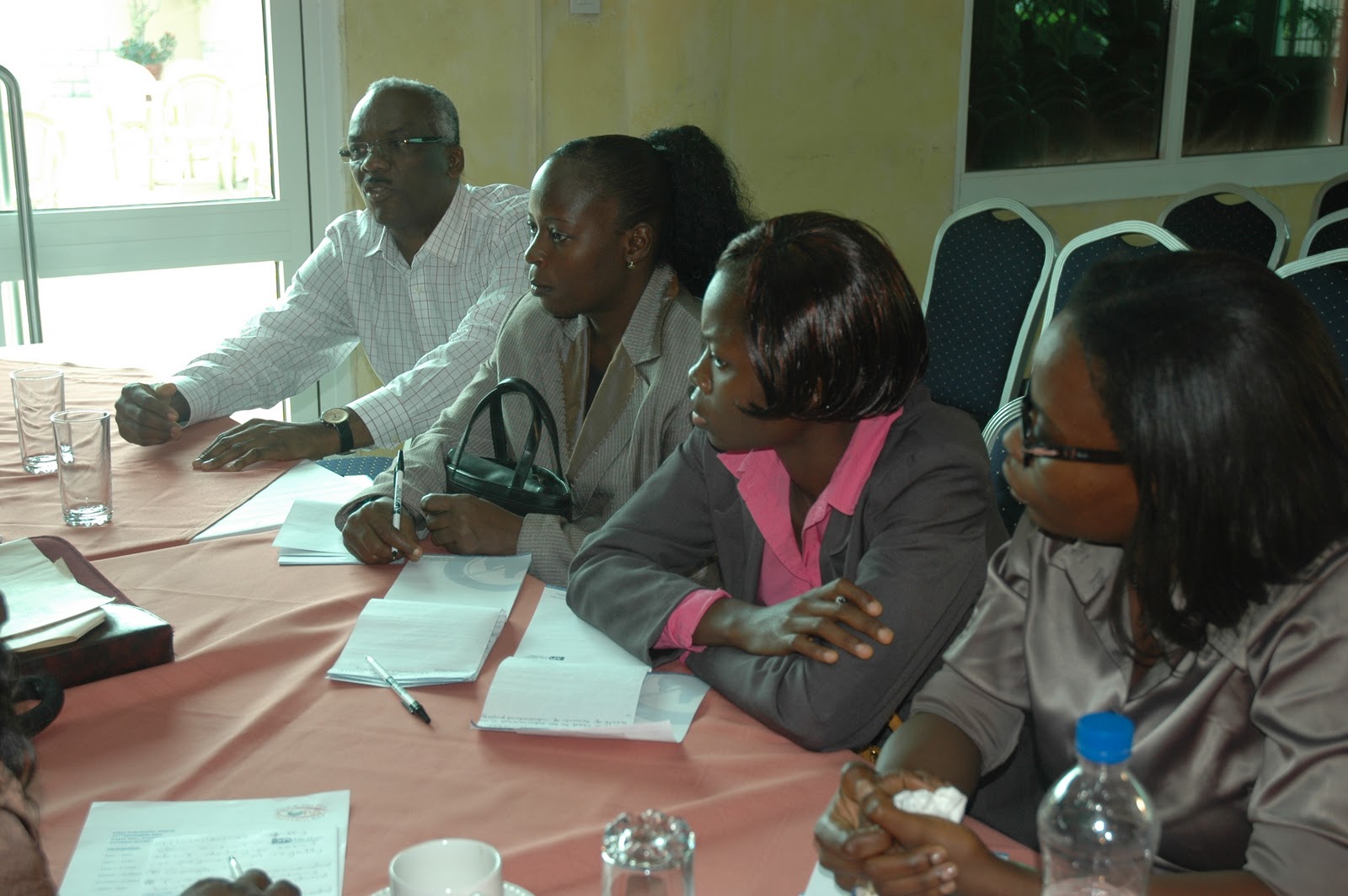
The tens of book publishers, who converged on the Cowrie Hall of Ocean View, Victoria Island, had come from within and outside Lagos, some as far as Ibadan, Abeokuta, and the Federal Capital Territory. Represented publishing houses cut across the various business ties: large-scale, small-scale, middle-class and nascent outfits. Their organisational differences found expressions in their individual compositions.
Cross section of publishers at the Publishers' Forum
The moderator, the Director of Pan African University (PAU), Professor Emevwo Biakolo, donned a spic-and-span butter colour suit, and had a distinctly slow speech production that betrayed his academic depth. There was the middle-aged man who had clad himself in a simple buba and sokoto, as if the event were an engagement ceremony. There was the young Cassava Republican, whose casual appearance belied her underlying intellect and passion for the book. The event coordinator hid his small frame in a simple shirt, which he neatly tucked into a pair of trousers. With a pair of spectacles over his expressionless face, he moved from one end of the hall to another, and spoke in a tone that was nigh on to hushed, even when he handled the microphone.   


But in all these differences, they all had a common worry; they had come together, in the first place, to deliberate on a challenge that had united them: the poor reading culture among Nigerians, especially the youths. It is no longer news that reading no longer commands the attention it received from the public. Youths, the particularly guilty group, have too many activities, many of them fleeting, competing for their attention.
Perhaps one of the dark sides of a vibrant movie industry is its total grip on the mind of the entertainment-conscious youth, who can conveniently sit an entire day in front of a television screen, without being short of intriguing movies to watch. For children, time spent with computer games is the popular choice as major distraction; their addictive tendencies have never been in doubt. On and on, one could go on making a list of other less profitable activities that have since taken over the place of reading; but it was generally agreed at the forum, that the task was not how to displace other activities, but to strike a balance between them all, such that youths still mature to adults without losing the intellectual depth only obtainable through reading.
Some of the publishers recounted harrowing experiences of investing in literature only to be ignored by supposed beneficiaries. Bibi Bakare-Yusuf of Cassava Republic would not forget one of such moments. “We once organised a book reading that was attended by more than 1,000 people. We were happy when we saw that people were trooping in. But at the end of the day, we sold just over 30 books. Talking from the point of my background, I ask myself why I would go to a book reading if I do not intend to buy the book.”
From Evans, a representative narrated the efforts on Wale Okediran’s
Tenants of the House, published two years ago, and the inadequate reward it yielded. “The book was everywhere, as far as publicity was concerned. And of course, the book was written by a popular figure, and its focus was popular, too. With all we did, we have not yet sold 2,000 copies.”
The current trend portends serious consequences for a nation seeking to secure a place among the world’s top 20 economies by 2020. This, the publishers recognised. They were honest, though, to state its devastating effect on the publishing business.
The Lead Resource persons at the Forum, Patrice Modilim,

ALTHOUGH the publishers’ forum focused on a number of topical issues in the business, it was effective marketing and distribution of books that had primacy. Somehow, almost every suggested solution seemed to have an accompanying bottleneck.
“The internet should be used to promote sale of books. Book publishing should begin to move in the direction of technology,” advised Patrice Modilim, a multidisciplinary 
professional and resource person at the forum. Much as appreciable progress seemed possible from that end, a participant described “internet payment systems and banks as impediments to sales.” She also said that “technology is overrated,” considering that only about “four to five per cent of books are sold through the internet.”
Another participant expressed her concerns over the internet. “Online buying and selling has its problems. For example, you are about to sell a book for 50 per cent of usual cost. But when you tell customers that both parties should share the cost of transportation to the person’s location, they just back out.”
Another participant, Muhtar Bakare, publisher of Farafina Books, called for incorporation of book reading into Nigerian culture, but quickly added the impossibility of this measure, without government interest. “Book reading is yet to be incorporated into Nigerian culture. It is a task that we cannot run away from. If the same people who made me read Ola Rotimi, Wole Soyinka, Chukwuemeka Ike, and so on, are the ones now going into textbooks, we must be asking them the reasons for the change.
“Government must set good example for the country to follow. On September 11 2001, at the time when the second plane hit the World Trade Centre, President George Bush was in a primary school, teaching pupils. We cannot talk about reading culture outside government policy; it’s a fallacy. It is the responsibility of the government to structure the curriculum in such a way that reading is given primacy. When a governor, for example, reads to pupils, the message is that every parent should read to their children when they get home in the evening. Every responsible government in developed countries does it; so ours should be no exception.”
Publishers Meet The Public: Muyiwa Oduyoye, MD of Safer Books
with Sandra Obiago of Communicating for Change and Dr Mbanefo
Still, Patrice canvassed the possibility of imagining there was no government (on the premise of past failures), and working out independent solutions, saying: “Government has tried its best, but has not succeeded. We cannot leave issues in the hands of government.”
He urged publishers to study strategies employed by other industries. “Nollywood is an example that the publishing industry should follow. It has battled piracy by partnering the Copyrights Commission to finance the fight against piracy using the Commission’s legitimate framework. There’s a lot that government can do. But there’s a lot more that we can ourselves.”

THE idea of bookshops opening retail centres all over the country came up also, but it was almost immediately struck off. Participants believed that it was impossible, given the weak finance of publishing houses, to expect them to spend like telecom industry players, who have done just that. As someone later said, the idea had not worked in the past. “Our bookshop has close to 100 outlets. But since people were not buying, we were forced to prune the number down gradually. From experience, only 5 per cent of books are sold through bookshops. Others are through supermarkets and direct marketing.”
Then came a suggestion on reducing the price of books. “We will achieve so much if we reduce the cost of books and take our marketing to the people. I believe that is very possible to reduce cost significantly without compromising quality. In India, cars used to cost $15,000 to $20,000. Someone said he would sell cars for $1,000. Now, it is happening. Everyone is doing it in that country. There are Indian books that sell for as low as N100 in this country,” a participant suggested.
But in the eyes of another participant, applying the Indian example to the country would not be easy. Her words: “What is happening in India cannot be replicated in Nigeria without government policy. Their government gives them a lot of support, with such policies as tax holidays, and all that. We do not have that privilege here.”
In the words of another, government’s role cannot substitute the place of a reading public. “My friends in India have been telling me that, asides government support, their industry has been thriving because there were about 30 million middle-class citizens who were buying books and strengthening the market when they started.”
  Septuagenarian publisher Oduyoye of Safer Books,
makes a point at the Forum
  Continuing, she urged publishers to attend to minor details that could affect sales. “Once, we visited a bookshop where we had been told that our books did not sell. We then suggested re-arrangement of the shelf. You will be shocked to find out that we sold all the copies in a day.”
In the same vein, Emike Oyemade shared her experience of how social networking could be relevant to publishing. “I opened a Facebook page for a book. At some point, about 4,000 people had joined it. Each day, I picked a sentence from the book and put it on the page. People were dropping comments, and that generated some sort of awareness for the book.”

Her final observations captured the magnitude of the problem they all wanted to solve. “Books on relationships and sex are what keep us going. Actually, they are bestsellers — those books on getting the right husband or wife, or having good sex lives. Management and business books and others in that category are behind.”
  As everyone at the forum agreed, there is yet no thriving economy in the world, which is driven by sex and romance. This, perhaps, effectively summaries all reasons the government must be just as bothered as the publishers.